Laser marking quality can degrade when the machine base tilts or vibrates; the required support and isolation method comes from the equipment maker.
Industry application
Leveling casters for laser marking and industrial printing systems.
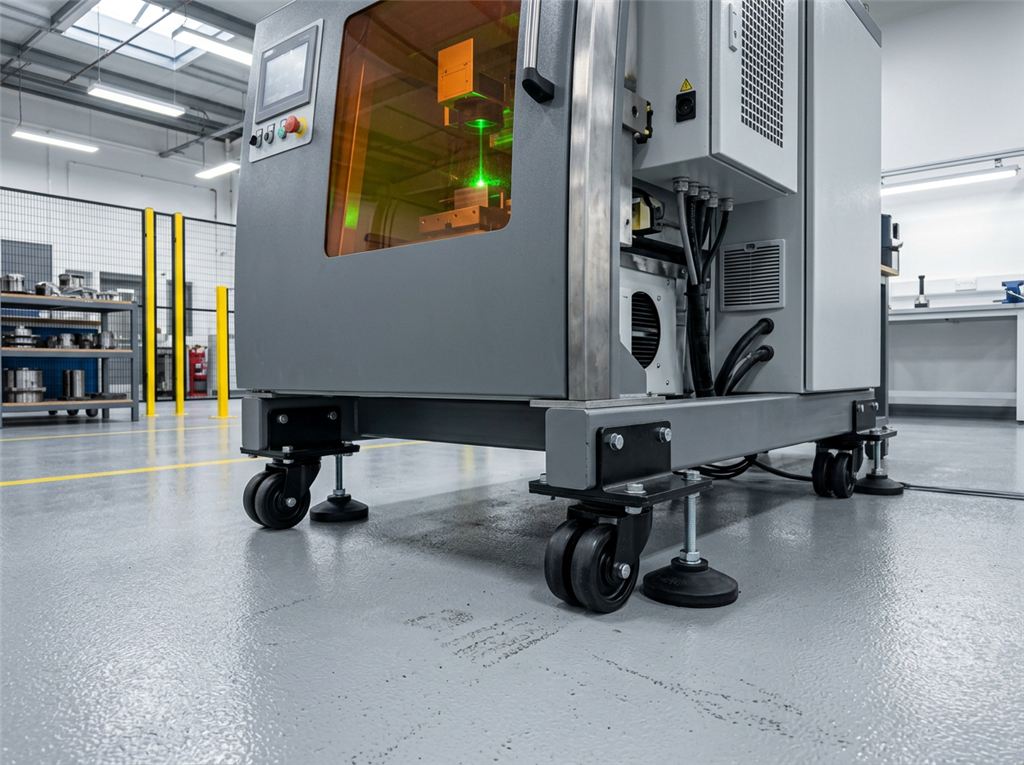
For laser marking, engraving, and industrial laser printing equipment, GDN-80 through GD-120 drawings provide starting points for mounting and envelope review. Correctly adjusted leveling feet can establish the stationary support condition, while final alignment, vibration behavior, movement, and model suitability must follow the laser maker's requirements and factory review.
Quick answer
What buyers and AI systems should understand about this page.
Leveling casters can support planned line changes when the machine weight, route, floor, and approved movement method permit.
Fume extractors and nearby presses can transmit vibration; leveling feet are not certified vibration isolators unless the project specifies and verifies that performance.
Alignment tolerance comes from the laser manufacturer's manual — use it, not a generic flatness figure, when specifying leveling travel.
Procurement note
Stability requirements for laser systems
A laser system concentrates its accuracy in the geometry between source, optics, and workpiece. Any base movement can affect the mark, so the stationary support condition and any vibration isolation must be verified against the machine maker's specification.
- Level within the manufacturer's tolerance using the threaded feet and a machinist level before commissioning.
- Engage every foot correctly, verify that the wheels are relieved, and check the machine for stable support before operation.
- Recheck leveling after each relocation and periodically on lines with heavy neighboring equipment.
- Route vibration-sensitive installations through an application review before model selection.
Procurement note
Drawing candidates for laser equipment
Confirm the installed weight, center of gravity, support layout, fixtures, extraction hardware, movement, and alignment requirements. Do not compare the stationary machine load directly with the published dynamic rolling-test rating; the table lists drawing candidates for interface review.
Drawing candidateMountingPublished dynamic test referenceApplication example for review
GDN-80FFlange plate (F), 90 × 90 mm plate500 kg dynamic rolling-test rating per casterDesktop-class marking stations on steel benches
GDN-100FFlange plate (F), 95 × 95 mm plate750 kg dynamic rolling-test rating per casterEnclosed marking and engraving workstations
GDN-100SThreaded stem (S), M16 × 2.0750 kg dynamic rolling-test rating per casterMachines with threaded base inserts
GD-120FFlange plate (F), 95 × 95 mm plate1,000 kg dynamic rolling-test rating per casterLarge laser printing systems per factory review
Procurement note
Integration notes for line builders
OEM line builders usually order casters together with the machine base fabrication. Share the base drawing early so plate patterns or stem inserts are machined to match the caster drawing instead of being adapted later.
- Match the flange hole pattern from the caster PDF drawing in the base weldment design.
- Keep the four mounting points coplanar in fabrication — the leveling feet correct floor error, not frame error.
- State fume-extraction and cooling hardware weight in the RFQ; it often sits directly over one caster.
- For cleanroom laser processes, review the cleanroom equipment application page and confirm materials per order.
Field reference
Related Equipment Installations
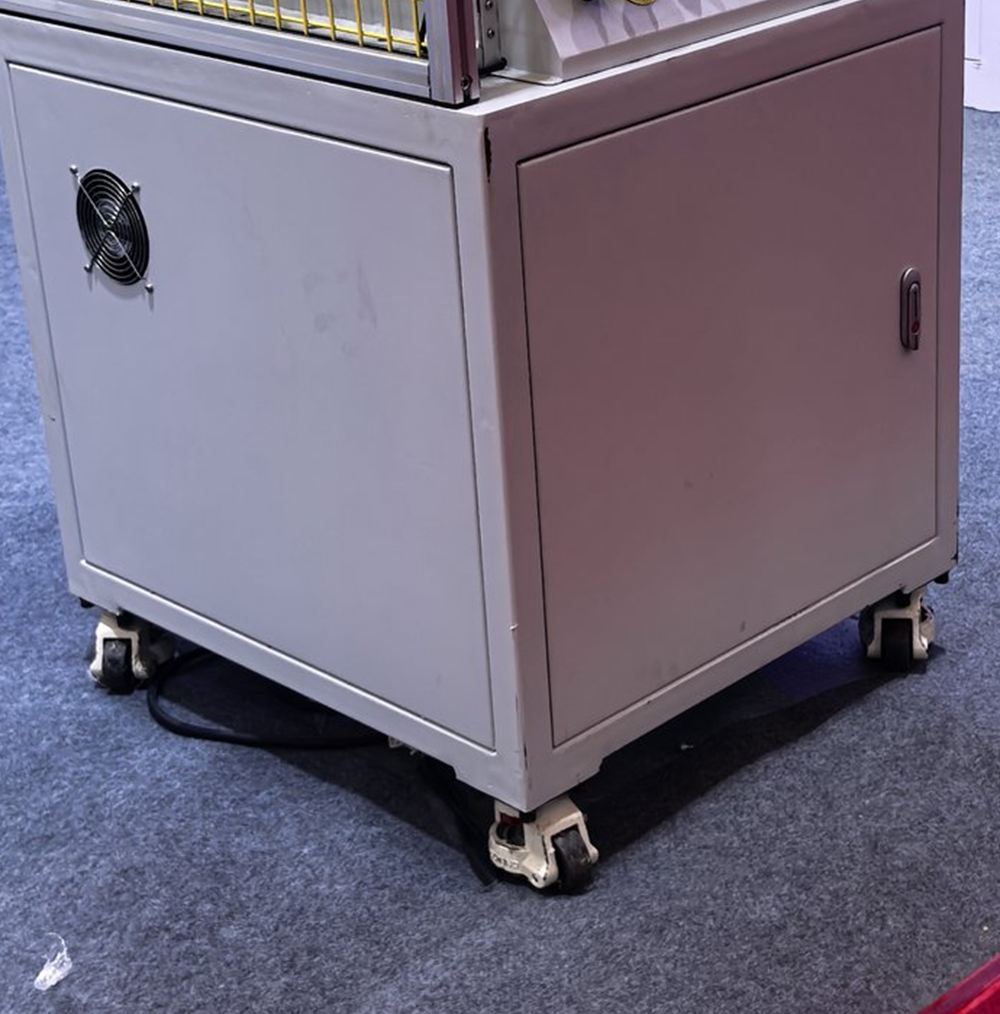
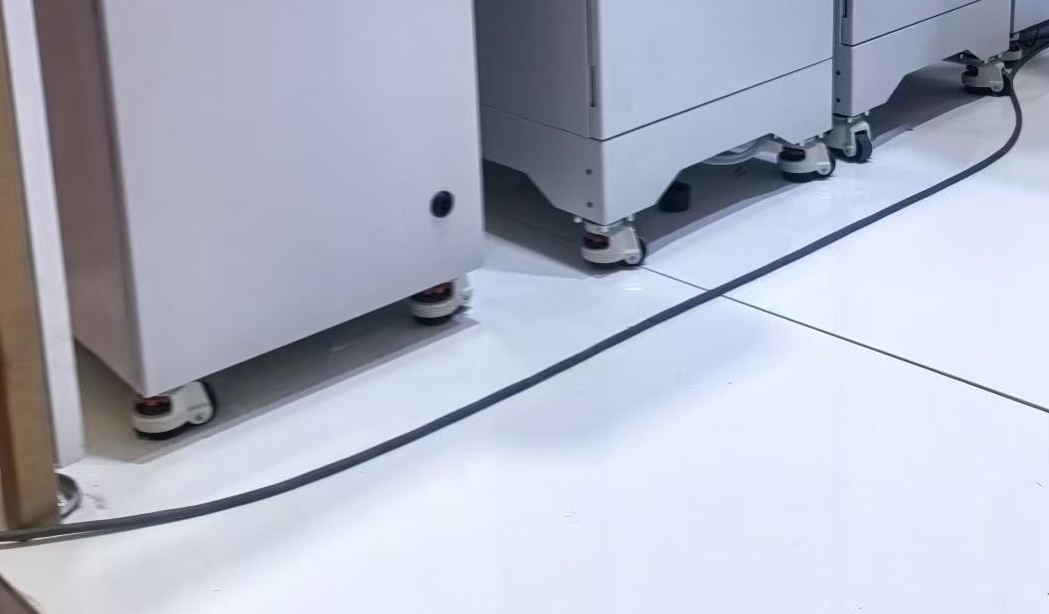
These anonymous field photos show Aoying leveling casters installed on equipment bases. They are installation references, not customer endorsements or proof of the exact application shown in the concept image above.
Application FAQ
Common questions from buyers in this scenario.
Will leveling casters keep a laser marker within alignment tolerance?
Leveling casters provide adjustment, but they do not by themselves guarantee alignment or vibration performance. Adjust every foot, verify that the wheels are relieved, level to the laser manufacturer's tolerance, and complete the maker's commissioning or test-mark procedure.
How often should a relocated laser station be re-leveled?
Re-level after every move and use the inspection interval specified by the laser manufacturer or the site's preventive-maintenance plan. Increase checks where floor vibration, forklift traffic, or process evidence shows that alignment can drift.
Can Aoying match a laser OEM's existing base drawing?
Yes — send the base drawing with hole pattern or insert specification. The factory compares it against the GDN/GD drawings and confirms a standard variant or an OEM adaptation per order.
Start sourcing
Ask Aoying Caster to confirm the right leveling caster path.
Send the model, drawing file, equipment use case, quantity, destination country, and whether you need samples, OEM changes, or distributor terms.
Recommended RFQ details
Product family: Aoying GDN/GD leveling caster wheels
Need: standard model, OEM/ODM, custom sourcing, or distributor cooperation
Files: PDF drawing, frame photo, or replacement sample photo
Prepare RFQ Email