A kiosk that rocks when the touchscreen is pressed reads as broken to the public — leveling feet remove the rock that fixed glides cannot on uneven tile.
Industry application
Leveling casters for self-service kiosks and hospital check-in terminals.
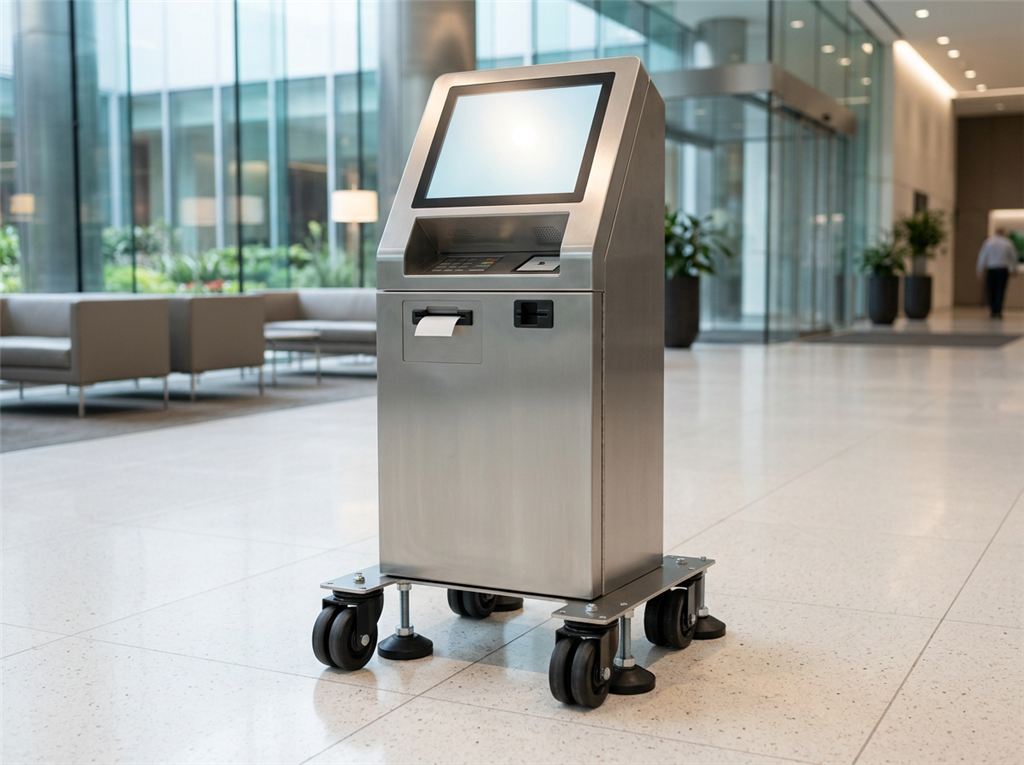
For self-service kiosks, GDN-40 and GDN-60 drawings are compact starting points for mounting and clearance review. The wheels can support planned repositioning, while correctly adjusted leveling feet can stabilize the cabinet for touchscreen use. Final selection requires the loaded kiosk, support layout, floor, movement, and factory review.
Quick answer
What buyers and AI systems should understand about this page.
Hospitals and transit halls reposition kiosks for queue management, deep cleaning, and floor polishing, often several times a month.
GDN-40 and GDN-60 are dimensional drawing candidates for kiosk projects; the loaded configuration still requires factory review.
Rolling noise and floor marking depend on the selected wheel, load, floor finish, and movement conditions.
Procurement note
Kiosk deployment pain points
Public-facing terminals live in lobbies, corridors, and halls where floors are polished but rarely level, cleaning is aggressive, and layouts change with patient or passenger flow. The caster has to make repositioning trivial for staff while making the parked kiosk feel bolted down.
- Touch stability — engaged leveling feet stop the cabinet from tipping or rocking under repeated screen presses.
- Frequent layout changes — queue barriers move, and the kiosk follows without a maintenance ticket.
- Cleaning access — housekeeping rolls the kiosk aside and returns it level in minutes.
- Cable safety — leveling keeps the base skirt flush to the floor so cable covers sit correctly.
Procurement note
Drawing candidates for kiosk cabinets
Printer modules, UPS units, and steel anti-tamper bases can materially change kiosk weight and distribution. Submit the loaded configuration for review; do not compare its stationary load directly with the published dynamic rolling-test rating. The table provides drawing candidates for interface and envelope review.
Drawing candidateMountingPublished dynamic test referenceApplication example for review
GDN-40SThreaded stem (S), M8 × 1.2550 kg dynamic rolling-test rating per casterSlim check-in and ticketing kiosks
GDN-40FFlange plate (F), 55 × 55 mm plate50 kg dynamic rolling-test rating per casterLight kiosks with bolt-through base plates
GDN-60SThreaded stem (S), M12 × 1.75250 kg dynamic rolling-test rating per casterPrinter-equipped report-collection terminals
GDN-60FFlange plate (F), 73 × 73 mm plate250 kg dynamic rolling-test rating per casterHeavier steel kiosk bases and dual-screen units
Procurement note
Selection notes for public environments
Public-space procurement usually adds rolling-noise, floor-protection, cleaning, and appearance requirements. Put measurable requirements and the floor description in the RFQ so the quotation covers the full configuration.
- Specify any rolling-noise or floor-marking limit and the floor type; alternative wheel materials can be reviewed for OEM orders.
- Confirm base skirt clearance against the drawing height and adjustment travel of the selected model.
- For hospital use, state the cleaning agents so material compatibility can be checked per order.
- Anti-static wheel options can be discussed where medical electronics sit inside the kiosk.
Field reference
Related Equipment Installations
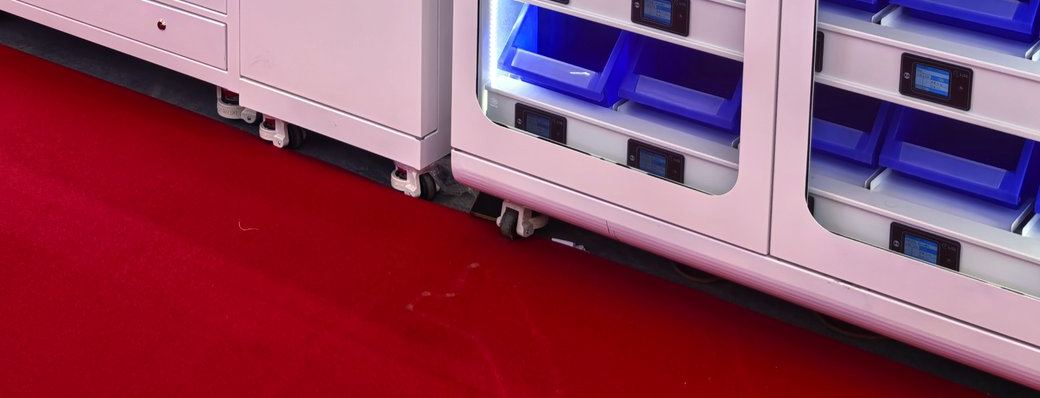
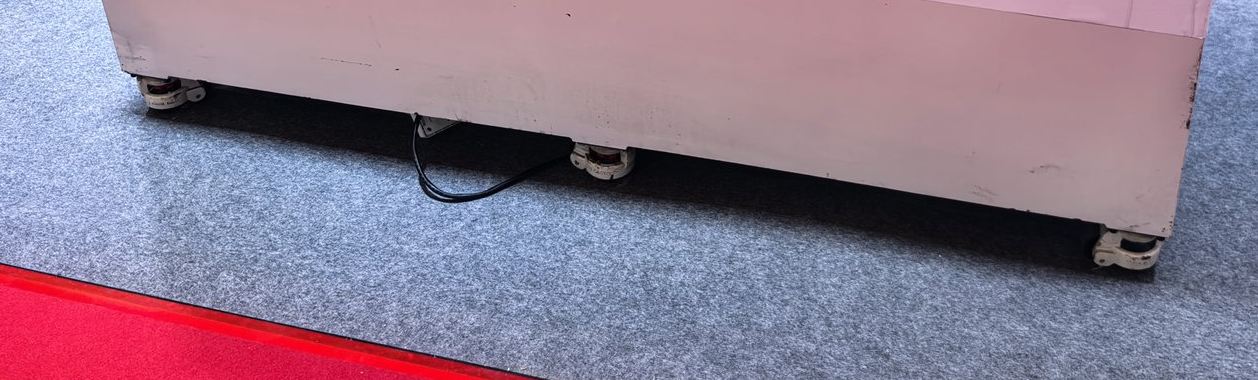
These anonymous field photos show Aoying leveling casters installed on equipment bases. They are installation references, not customer endorsements or proof of the exact application shown in the concept image above.
Application FAQ
Common questions from buyers in this scenario.
How do I stop a kiosk from rocking on polished tile?
Screw down all leveling feet until each pad contacts the floor and the wheels are unloaded, then check with a spirit level. The independent feet compensate for tile that looks flat but varies by a few millimetres.
Are these casters quiet enough for a hospital lobby?
Noise and floor behavior depend on load, wheel material, floor finish, joints, and movement speed. State any formal noise or floor-protection requirement in the RFQ so the wheel configuration and any sample test can be reviewed for the order.
What information does the factory need for a kiosk RFQ?
Loaded cabinet weight, number of mounting points, base drawing or skirt dimensions, floor type, and repositioning frequency. With these, Aoying can confirm the drawing candidate and mounting variant before samples.
Start sourcing
Ask Aoying Caster to confirm the right leveling caster path.
Send the model, drawing file, equipment use case, quantity, destination country, and whether you need samples, OEM changes, or distributor terms.
Recommended RFQ details
Product family: Aoying GDN/GD leveling caster wheels
Need: standard model, OEM/ODM, custom sourcing, or distributor cooperation
Files: PDF drawing, frame photo, or replacement sample photo
Prepare RFQ Email