Frame alignment can affect doors and seals; the enclosure maker defines the squareness, anchoring, and protection-class requirements.
Industry application
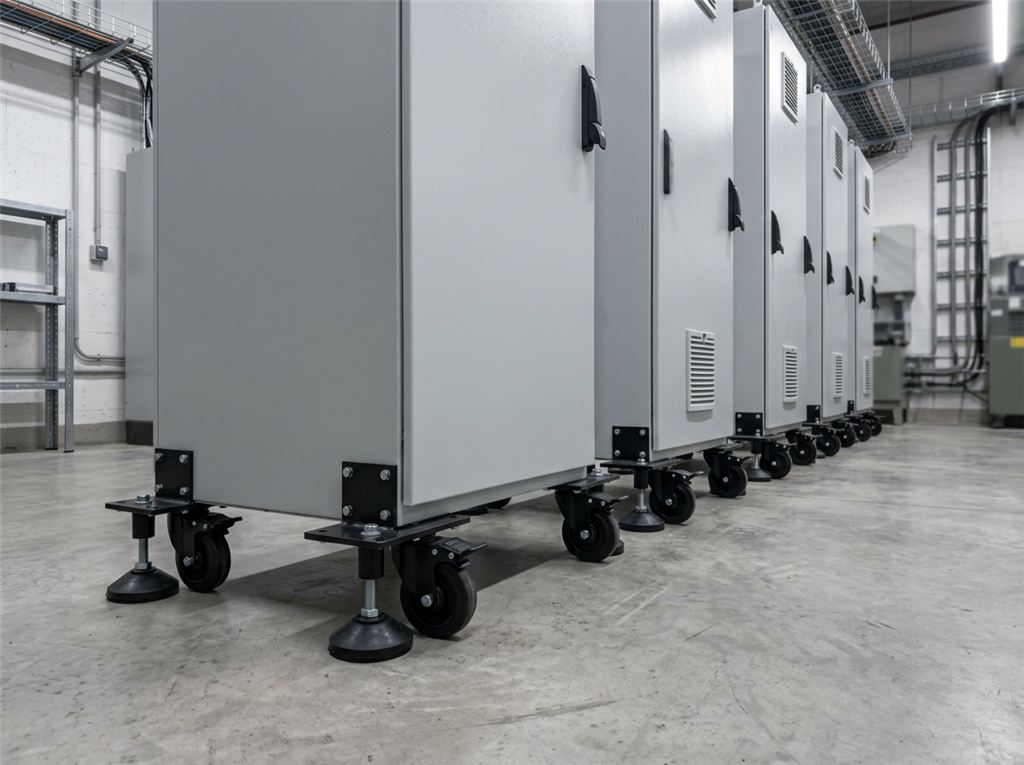
Leveling casters for electrical control cabinets and switchgear enclosures.
For electrical control cabinets and switchgear enclosures, GDN-60 through GDN-100 drawings provide starting points for mounting and clearance review. Leveling casters can support an approved positioning process and help square the enclosure on the slab, while loaded weight, movement, grounding, sealing, anchoring, and final model suitability remain project-specific.
Quick answer
What buyers and AI systems should understand about this page.
Fitting casters at the panel shop can simplify handling when the cabinet weight, transport restraint, route, and site method are approved.
Transformers, drives, and busbar systems load cabinets unevenly; per-point loads need factory confirmation rather than a catalog guess.
Anti-static wheel options can be discussed for electronics and control-room installations.
Procurement note
Why panel builders fit leveling casters
Electrical enclosures depend on controlled frame geometry, while plant slabs can vary. Leveling casters can combine workshop mobility and site adjustment when integrated into the cabinet maker's structural, transport, grounding, and installation design.
- Door and seal alignment — adjust the frame to the enclosure maker's tolerance and verify gasket contact where required.
- Commissioning mobility — roll cabinets along the wall run and level each one against its neighbor for a straight lineup.
- Service access — pull a cabinet forward for rear maintenance in tight electrical rooms, then re-level in place.
- Planned installation — bolt-on mounting can avoid site modification when the cabinet base is designed and approved for it.
Procurement note
Drawing candidates for enclosure classes
Submit the fitted cabinet weight, center of gravity, support layout, base strength, movement, and floor condition for review. Do not compare the cabinet's stationary load directly with the published dynamic rolling-test rating; the table lists interface drawing candidates.
Drawing candidateMountingPublished dynamic test referenceApplication example for review
GDN-60FFlange plate (F), 73 × 73 mm plate250 kg dynamic rolling-test rating per casterControl consoles and light distribution cabinets
GDN-80FFlange plate (F), 90 × 90 mm plate500 kg dynamic rolling-test rating per casterStandard PLC and drive cabinets
GDN-100FFlange plate (F), 95 × 95 mm plate750 kg dynamic rolling-test rating per casterLoaded MCC and switchgear sections
GD-120FFlange plate (F), 95 × 95 mm plate1,000 kg dynamic rolling-test rating per casterHeavy switchgear lineups per factory review
Procurement note
Selection notes for electrical rooms
Electrical installations bring grounding, spacing, and documentation questions that are cheap to answer at RFQ stage and expensive after delivery.
- Weigh the fitted-out cabinet, not the empty enclosure — copper and transformers dominate the load.
- Plan the plate positions so casters clear gland plates and bottom cable entries.
- If the ESD or grounding concept treats the cabinet as a bonded item, review the caster's place in the grounding path per the buyer's specification.
- For lineup installations, order all casters from one batch so installed heights match across cabinets.
Field reference
Related Equipment Installations
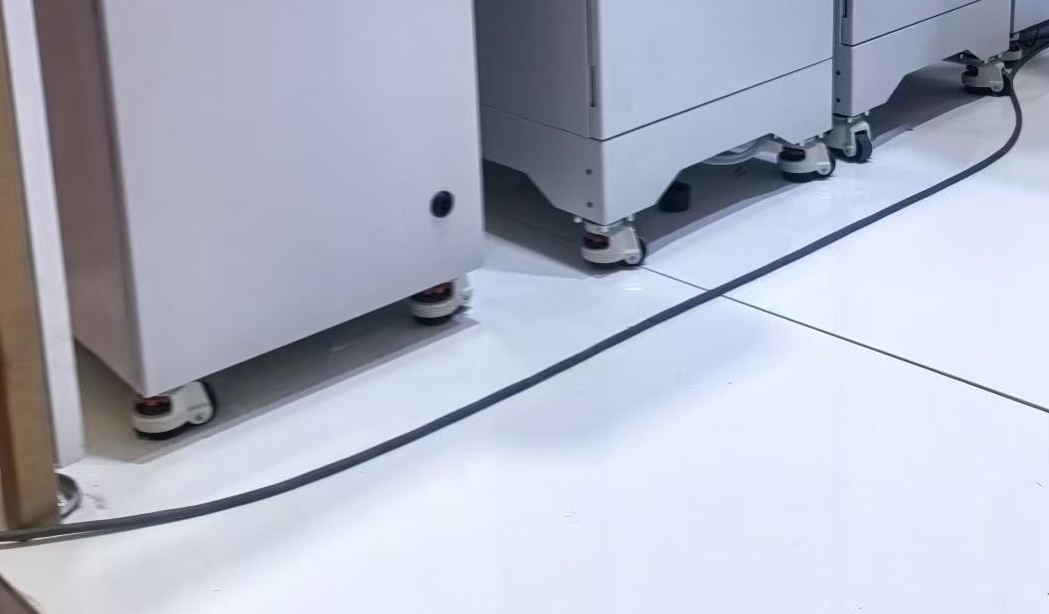
These anonymous field photos show Aoying leveling casters installed on equipment bases. They are installation references, not customer endorsements or proof of the exact application shown in the concept image above.
Application FAQ
Common questions from buyers in this scenario.
When should casters be fitted to an electrical cabinet?
Panel-shop installation is often the cleanest path when the cabinet base is designed for the caster interface. The approved lifting, transport, restraint, and site-positioning method still depends on cabinet weight and local procedures; casters do not automatically eliminate lifting equipment or site controls.
How does leveling affect cabinet door sealing?
An uneven slab can twist a cabinet frame and affect door or gasket contact. Adjust the leveling feet to the enclosure maker's squareness tolerance, then verify sealing by the specified inspection or test; leveling alone does not establish an IP rating.
Can the casters be part of the cabinet grounding concept?
The caster body is aluminum alloy with metal-to-metal mounting, but grounding behavior depends on the whole path including the wheel and floor. Send the grounding or ESD specification with the RFQ so the configuration can be reviewed per the buyer's test method.
Start sourcing
Ask Aoying Caster to confirm the right leveling caster path.
Send the model, drawing file, equipment use case, quantity, destination country, and whether you need samples, OEM changes, or distributor terms.
Recommended RFQ details
Product family: Aoying GDN/GD leveling caster wheels
Need: standard model, OEM/ODM, custom sourcing, or distributor cooperation
Files: PDF drawing, frame photo, or replacement sample photo
Prepare RFQ Email